Yoga Flows for Athletes: Flexibility and Recovery
Targeted yoga flows help athletes unlock mobility, speed recovery, and prevent injuries. Use these sequences and tips to move, breathe, and rebound.
Why Yoga Supports Athletic Performance — For athletes, yoga is more than a cool-down; it is a practical method to sharpen mobility, reinforce motor control, and accelerate recovery. Thoughtful flows cultivate a wider, more usable range of motion without sacrificing stability, which translates to smoother strides, cleaner lifts, and more efficient mechanics. Integrated breathwork improves CO2 tolerance and pacing, helping you stay composed under effort and recover faster between intervals or sets. Slow, controlled transitions teach the nervous system to own end ranges, reducing compensations that rob power and increase risk. Gentle pressure and movement hydrate fascia and connective tissue, improving glide so joints feel free rather than sticky. Perhaps most underrated, yoga offers structured downregulation; by shifting toward a parasympathetic state, you calm the system, ease muscle tone, and set the stage for quality sleep and tissue repair. Used consistently, it becomes a balancing force that supports performance, longevity, and the daily demands of training.
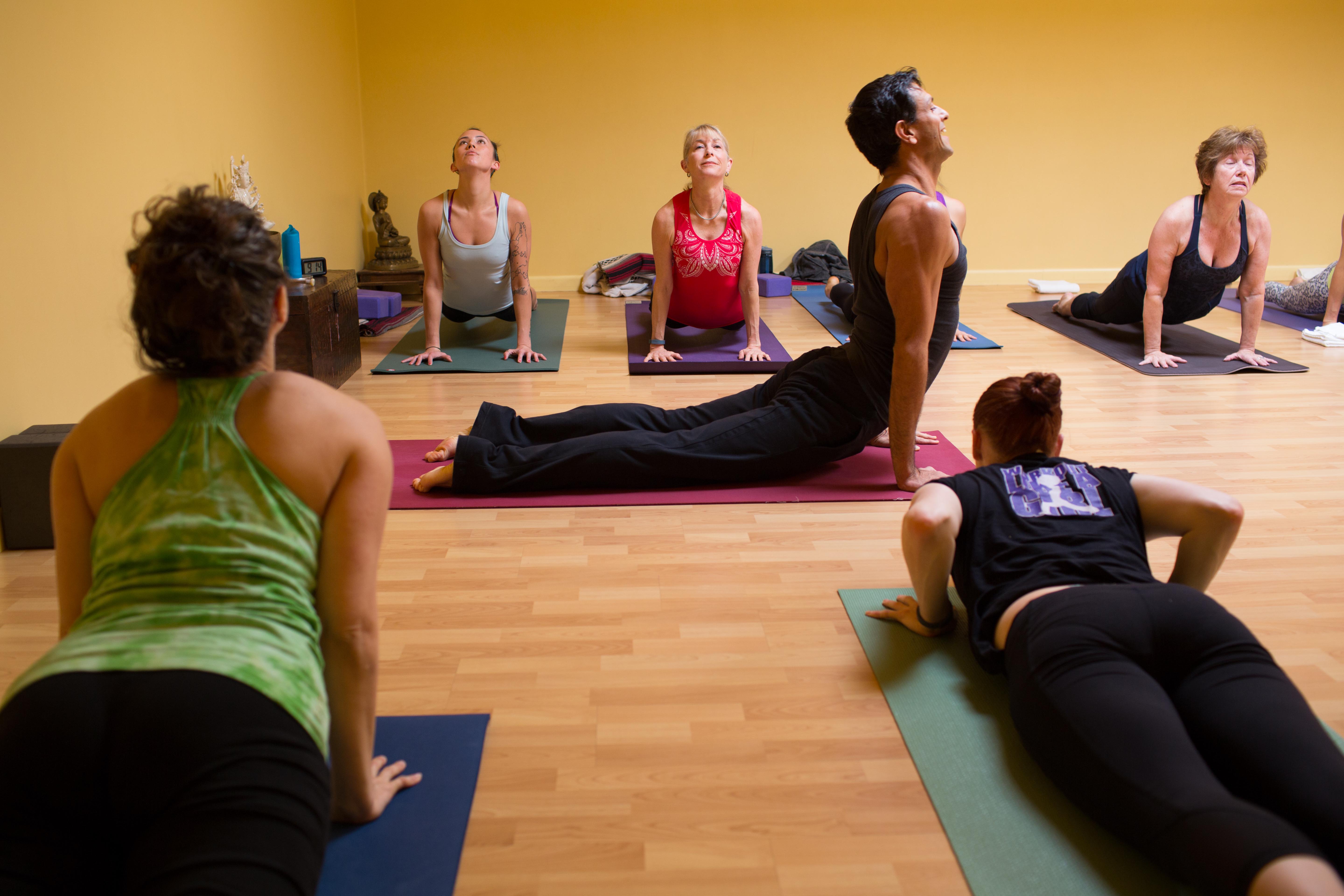
Dynamic Pre-Workout Flow — Before training, choose a dynamic sequence that raises temperature, awakens joints, and primes patterns without fatigue. Start with diaphragmatic breathing, matching inhales and exhales to gentle spinal waves like cat–cow to mobilize the thoracic spine. Flow into a low lunge with posterior chain flossing: straighten and bend the front knee while keeping the spine long, then add arm sweeps and shoulder circles to sync upper and lower body. Step into a lunge with rotation, pressing through the back heel to wake the hip flexor while the ribcage spirals open. Add ankle pumps, knee-over-toe rocks, and calf raises to prepare the lower leg for ground contacts. Finish with a short standing sequence: hinge-to-reach patterns, alternating lateral lunges, and gentle hip CARs to claim end ranges. Keep the tempo smooth, the breath steady, and the range pain-free. You should feel warm, elastic, and switched on, not stretched out or sleepy.
Post-Training Recovery Sequence — After hard efforts, shift toward restorative work that calms the nervous system and releases residual tone. Begin supine with hand-to-belly breathwork, lengthening the exhale to downshift. Move into a supported forward fold and soft side bends to decompress the spine and ribcage. From the floor, try a reclined hamstring stretch using a towel or strap, keeping the hip heavy and the ankle traveling through gentle pumps to invite tissue ease. A long, passive hip opener like figure four can unravel glute and deep rotator tension that accumulates with running and lifting. Slide into a supported bridge to nourish the front line without cranking the low back, then settle into legs up the wall to encourage venous return and reduce lower-limb heaviness. Close with a slow supine twist and a minute of stillness, sensing the heartbeat settle. This sequence promotes circulation, rebalances muscle tone, and primes sleep so repair processes can take the lead.
Mobility, Stability, and Injury Prevention — The most effective flows blend mobility with stability, creating resilience where athletes need it most. Target the hip–knee–ankle chain with controlled transitions that teach the knee to track cleanly while the hip maintains rotation. Mix in isometric holds at end range to build tendon capacity, then exit slowly to train eccentric control, a key buffer against strains. For the upper body, reinforce scapular mechanics: loaded shoulder blades down the back in plank variations, serratus-driven protraction in quadruped, and rotational reaches that maintain thoracic mobility. Integrate single-leg balance with soft focus on the big toe and arch to wake foot intrinsics and improve proprioception. Pair mobility drills with light core bracing, so new range becomes usable strength. Move with intention, not momentum; the goal is to map joint positions the nervous system trusts. Over time, these tissues feel springy, joints track smoothly, and small aches stop stealing attention from performance.
Programming and Consistency for Athletes — Place yoga where it best serves your training goals. Use short, dynamic warm-ups before sessions to prime movement, and longer, restorative flows after demanding work to accelerate recovery. On off days, choose a moderate, full-body session that explores hips, thoracic spine, and ankles while keeping the heart rate calm. Customize with regressions and progressions: add props like a towel for reach, a cushion for support, or reduce range to keep joints honest. Track outcomes that matter: smoother technique, easier first steps of a run, fewer sticky reps, deeper, calmer breathing, and reduced next-day soreness. Distinguish discomfort that signals tightness from pain that warrants stopping and reassessing. Consistency beats intensity; brief, frequent touches build durable change. Blend this work with strength, plyometrics, and skill practice, and you create a training ecosystem where tissues recover, patterns refine, and performance has room to rise.