Speed and Agility Drills for Field and Court Sports
Boost game-day performance with targeted speed and agility drills, progressions, and coaching cues to improve acceleration, change of direction, and reaction.
Foundations of Speed and Agility: Efficient speed begins with clean mechanics and smart preparation. Prioritize a dynamic warm-up that raises temperature and primes the nervous system: ankle circles, hip openers, leg swings, and thoracic rotations. Follow with activation for glutes, core, and calves using mini-band walks, plank variations, and calf raises. Reinforce posture with A-marches, A-skips, and ankling to engrain rhythm, dorsiflexion, and quick ground contact. For acceleration, lean from the ankles, keep a neutral spine, and drive elbows from cheek to back pocket to amplify arm swing and stride frequency. Think about projecting the hips forward while maintaining a positive shin angle. Keep contacts under the hips and land quietly to build stiffness without pounding. Quality reps beat volume; end sets before form breaks down. This foundation reduces injury risk, builds elastic strength, and sets the stage for more intense field and court work where efficient movement economy separates consistently fast athletes from sporadically fast ones.
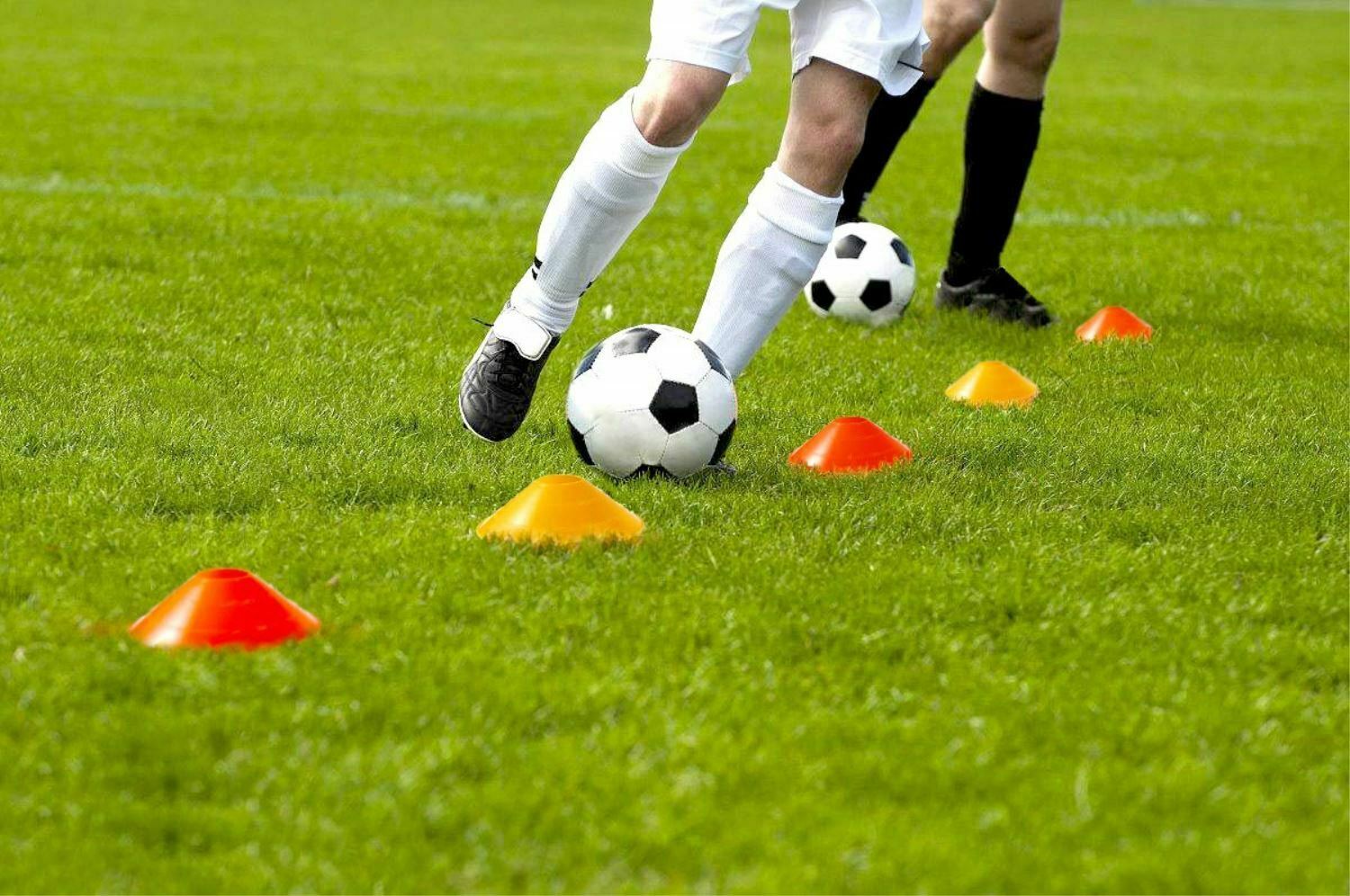
Linear Acceleration Drills: Acceleration wins short races to the ball, space, or rebound. Use falling starts to teach body lean and commitment off the first step, then progress to three-point and split-stance starts to mirror game stances. Wall drills reinforce shin angles and torso alignment; push hard through the floor with a rigid core. Add sled sprints or lightly resisted bands to teach projection and force application without overstriding; keep resistance low enough to maintain speed mechanics. Hill sprints build force and posture naturally by shortening the ground contact window. Sprinkle in bounds for horizontal power and rhythm. Keep reps short, crisp, and fully focused, with ample rest so each effort is truly maximal. Cue athletes to punch knees forward, strike beneath the hips, and drive arms aggressively while relaxing the face and shoulders. Measured steps, not frantic ones, create the smooth, explosive acceleration that transfers to every field and court situation.
Change of Direction and Deceleration: True agility starts with the ability to stop on demand. Train deceleration by lowering the center of mass, bracing the core, and sitting the hips back while keeping the knees aligned with the toes. Practice snap-downs, stick landings, and quick two-step brakes to teach eccentric control and safe shin angles. Build into shuffle-to-sprint, crossover-to-backpedal, and drop-step transitions so athletes can escape or close space efficiently. Use cone patterns like T-drills, zigzags, and semicircles to explore different plant angles and foot positions, keeping steps under the body to avoid slipping. Add reactive cues—coach calls, colored markers, or hand signals—to shift from pre-planned change of direction to true agility, where perception and action are tightly linked. Emphasize short, powerful steps on exit, eyes up, and hands active for balance. This blend creates athletes who brake safely, redirect force quickly, and reaccelerate with intent, reducing wear on joints while increasing game-speed movement.
Footwork, Coordination, and Plyometrics: Fine-tune coordination and timing with ladder patterns, cone grids, and mini-hurdles. Use simple steps first—single in, lateral in-out, and icky shuffle—then progress to crossover, hip turns, and split steps. Keep posture tall, steps light, and contacts brief to build quickness rather than sloppy speed. Pair these with low-to-moderate plyometrics: pogo hops for ankle stiffness, skater jumps for lateral power, and snap-down to vertical jump combos to connect braking and takeoff. Focus on quiet landings, knees tracking over toes, and soft yet reactive contacts to enhance rate of force development. Add a rope-skipping block to groove rhythm and forefoot dexterity. Finish with curved sprints around cones to train curvilinear speed, which appears constantly on open fields and tight courts. The goal is intelligent footwork that translates to confident cuts, graceful recoveries, and dependable repeatability under fatigue.
Sport-Specific Blends for Field and Court: Transfer general speed to game reality by layering skills, spacing, and pressure. For field sports, mix curved runs, angle cuts, and stop-to-go patterns while tracking a ball or marking an opponent. For court sports, pair closeouts, slide-to-sprint, and backpedal-to-jump sequences with ball handling or passing to mesh footwork with decision-making. Create small-sided scenarios where players react to visual or auditory triggers—coach points, partner cues, or ball flight—so agility becomes perception-action coupling, not just choreography. Build drills that switch roles rapidly: attack to defend, receive to pass, or shot fake to drive. Emphasize scanning, communication, and body positioning that protects space and opens angles. Keep reps short, cues clear, and rest sufficient to preserve quality. These blends teach athletes to read the moment, choose the right cut, and execute at pace, which is the essence of real, usable speed.
Programming, Progression, and Recovery: Place high-speed work when athletes are freshest, often early in sessions after a thorough warm-up. Start with low volumes, progress complexity or intensity gradually, and prioritize quality over fatigue. Combine two to three focused speed and agility blocks weekly, separated by recovery to protect tendons and hamstrings. Track intent and readiness with simple tools: perceived effort, rep times, and technique notes. Rotate themes—linear acceleration, deceleration, multidirectional agility, and plyometrics—so tissues adapt and skills sharpen. Choose safe surfaces and supportive footwear, and stop sets if mechanics degrade. Cool down with light aerobic work, mobility for hips and ankles, and gentle tissue care. Support the process with hydration, balanced nutrition, and consistent sleep so the nervous system absorbs high-speed stimulus. This sustainable approach builds durable elastic strength, sharper reactivity, and repeatable game-speed efforts without sacrificing health or long-term development.